
When we began van life, road tripping through Baja, Mexico was high on my bucket list. There is so much to see and do, it can be hard to plan for. I genuinely hope this post gives you all the information you need for driving to Baja, Mexico and planning an epic Baja California road trip.

**This post contains affiliate links. I may make a small commission from these links at no extra cost to you. As an Amazon Associate I earn from qualifying purchases. Read my full disclosure HERE.
We happened to be in the Birthing Cave in Sedona (quite the name, right?) when we met a girl who was also in her first month of van travel. A discussion of driving to Baja, Mexico ensued and our mutual desire to venture there someday in our vans. We agreed to keep in touch about a potential caravan for the following winter.
Fast forward to February, almost a year later, and here we are in the quaint little town of San Ignacio in Baja California Sur eating some interesting sweet cornbread thing filled with cheese, squealing in delight over the oddly shaped Mexican street dogs. How do they have wiener dog bodies but heads like a dingo?
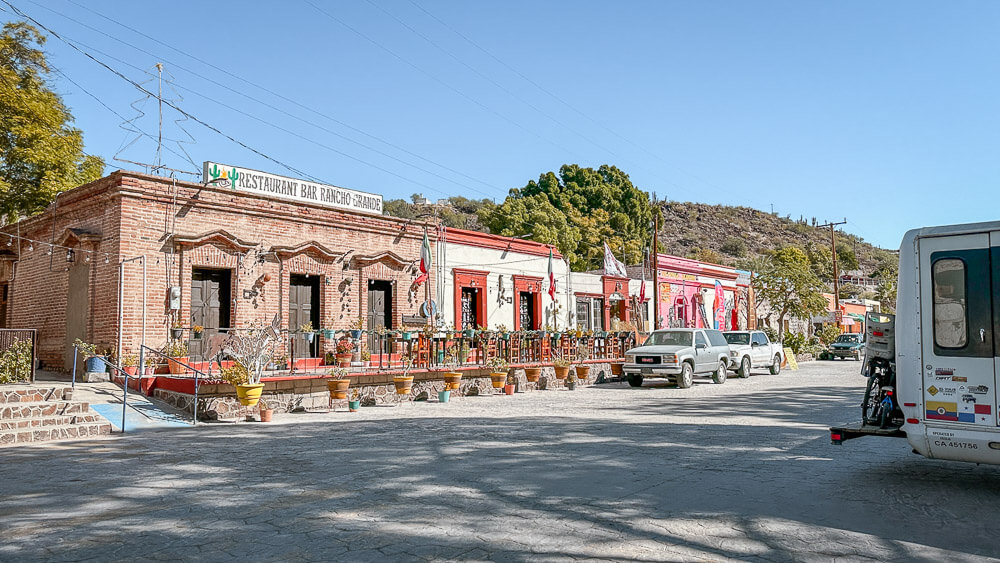
We did indeed form a caravan for driving to Baja together and it has been nothing short of magic.
Anyways, you can also find my Baja itinerary HERE where I shortened it to one month where you can still visit all the places. I realize most people don’t have 2+ months to road trip Baja.

About the Baja California Peninsula
Baja is comprised of two states. The northernmost is Baja California (B.C.) and the southern is called Baja California Sur (B.C.S.). It is not devoid of crime and cartels, but it is drastically less prominent than mainland Mexico.
The peninsula is 775 miles long and its width ranges from 25 to 200 miles wide. There are 1900 miles of coastline and 65 islands. The Baja Peninsula is separated from the mainland of Mexico by the Gulf of California, aka the Sea of Cortez. The largest city in B.C. is Tijuana and the capital is Mexicali. La Paz is the capital and most populated city in B.C.S.
What You Need in Order to Drive Into Baja, Mexico
1) Passports
No surprise here, you must have your passport. Make sure it is not expiring within 6 months. I have yet to have anyone actually check my passport but I think it’s safe to assume I wouldn’t make it home without it.

2) Drivers License
If you’re driving, you’ll obviously need your license. But bring a copy in case something happens to it.
3) FMM
The FMM (Forma Migratoria Múltiple or Multiple Immigration Form) is a paper tourist card that is required for traveling more than 20 kilometers beyond the border. It is being phased out for a passport stamp at airports, but at this time, land borders still require you to stop and go into the National Migration Institute (INM) at the border, fill out the form with your passport info and time you plan to be there up to 180 days. Even if border agents don’t direct you there or wave you through, you must park and walk into the INM office. You must keep your portion of the paper with you and potentially provide it to authorities when you depart (although I’ve heard this rarely happens). The FMM cost is $687 pesos or around $40 US per person at the time of writing this. The fee doesn’t apply if you stay for less than 7 days, but you’re still suppose to obtain the FMM.
You can get, pay for, and obtain the FMM online now and print it, but you must take it into the official at the border and have it stamped in order to be valid. I’ve also heard that people have ended up having to pay at the border AGAIN if they didn’t fill it out perfectly online with the correct entrance date, etc. For this reason, I’d just pay it at the border. Last year we had to pay in cash, then this year we had to pay with a credit card. I’d have both just in case. It took us literally 5 minutes.

4) Embrace IT Tourist Fee
This new state fee applies to all foreign visitors staying longer than 24 hours. The cost is 488 pesos ($29 US) must be paid each time you enter and is done online on the EmbraceIt website. It is not included in airline tickets either. Currently it is inconsistently being verified upon departure mostly by air so if you arrive by land border, it is based on the honor system and not currently enforced. But the proceeds go to public safety, healthcare, social infrastructure and more. I think it’s a good way to give back to Baja for welcoming visitors to their beautiful home.
5) Mexican Liability Insurance
Regardless of your auto insurance you currently hold, you are still required to hold Mexican liability auto insurance. There are a few companies I’d heard recommended. I compared quotes, but it ultimately came down to hearing many people’s preference for Baja Bound due to ease to work with in the case of an accident. I read a lot of discussions in the “Talk Baja” Facebook group and concluded they seemed to be the most recommended.
If you plan to drive your own vehicle down into Mexico, chances are your car insurance back home will not cover you. My Safeco policy had an add on full coverage option for just a few dollars more than my regular premium per month that covers towing to a repair shop in the US for repairs or the cost of repairs in Mexico, whichever is less. I heard warnings of caveats about not being covered more than a certain number of miles away from the border or other restrictions though, so I still opted to make my Mexican auto insurance through Baja Bound a full coverage policy.
With Baja Bound and most companies, you can choose to either pay by the day, for 6 months, or for an annual policy. The 6 month option was cheaper for us than the daily option when we planned to stay for up to 3 months. The highest vehicle value you can put in is $100,000 without calling and talking to someone. We probably have closer to $115,000 into ours but for simplicity I just chose the max of $100k. The 6 month policy cost almost $1000 which was more than I was expecting, but worth it for the peace of mind.
6) Vehicle Registration
I’ve not had anyone ask for our vehicle registration but if we happen to get pulled over, I assume it will be requested. Just like back home, have your registration and a copy is a good idea too.
7) For traveling with pets 3 months and older: Rabies vaccination records
Pets need to be 3 months old to cross the border. How you prove that, I have no idea. What you are supposed to have is proof of your pet’s up to date rabies vaccine. A health certificate from the veterinarian is no longer required at land borders. You can bring up to 3 pets without import taxes. Pets include dogs and cats. So bring as many other creatures as you want.
Optional Things to Bring to Drive Into Baja, Mexico
1) Walkie Talkies
This one had not even occurred to me. When we met up with our caravan someone suggested having walkie talkies so those of us who didn’t have them, went into Walmart and bought them. They were incredibly helpful and I can’t imagine not having had them now for traveling in a group.
We’d use them for things like warning each other of an upcoming hazard in the road, radioing ahead to say someone was passing us like a crazy person, slow down there’s a dog crossing the road, or “Holy shit, look at that amazing view,” or “I have to pee, anyone else need to stop?” Necessary stuff.
It was also helpful when we’d come to a campground to confirm we were charged the same amount or if we came upon someone stopping us and asking for something we could ask each other, “Hey, what is he wanting? Did you have to pay for something?”
We got a basic set like THESE from Walmart. You can also buy them on Amazon ahead of time.

2) Dash Camera and Steering Wheel Lock
The dash camera literally gave me a lot of peace of mind. I was comforted that I could point to it if a cop came up to our window. I could also rely on it if we had a traffic accident where we were accused of something. Plus, I think it could defer break-ins because someone may assume it’s running constantly. It was incredibly quick and easy to plug in and I ordered it off Amazon before we left.
Here’s the one I got:

Maybe I went overboard with the steering wheel lock, but it made me feel better. We rarely were away from our vehicle for long but if we were walking around town for long, I used it. I feel like it looks like a deterrent in general just from the outside.

3) Copies of everything
You should have copies of documents regardless of where you travel, but I had copies of passports, drivers licenses, registration, and car insurance. I’d also carry a list of phone numbers for emergency contacts in your vehicle or wallet in case of an accident and authorities need to contact your family.
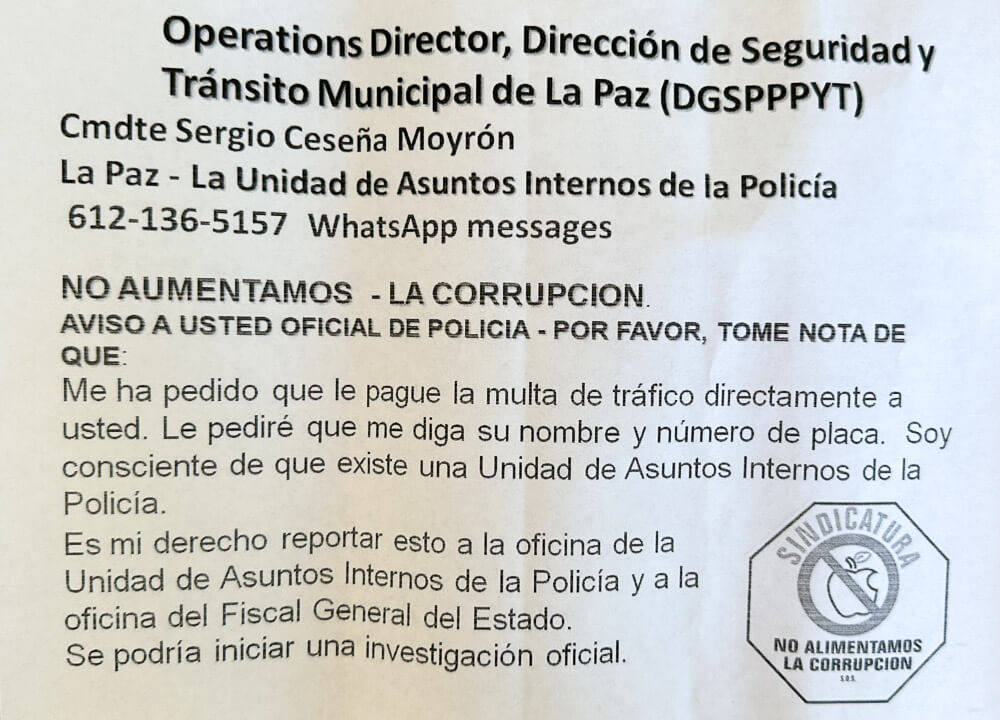
4) Statement for cops
I found numerous printouts in the Facebook group “Talk Baja” to print. Feel free the save these and print them. One of the things to know is the phone number for the English speaking Baja tourism hotline at 078. A thorough and helpful article to read can be found HERE. Although it’s about Tijuana, it can apply anywhere in Mexico.

5) Starlink
I’m sure you’ve heard of Starlink, but if not, I’ll introduce you to it. This satellite internet service provides incredibly fast service essentially anywhere. You pay for a dish that you own (initial setup fees are around around $200+ depending on which plan or device you get) then a monthly access fee that can be turned on and off. Here is the Starlink website. The beauty of Starlink is it works best where no people are – essentially the opposite of most internet we’re used to having (cell service).
We take our satellite with us in the van and set it on top of the van or on the ground and plug it in to an outlet in the van. It finds satellites and boots up quickly. Within a minute we have speeds equivalent to fiber. I’ve heard mixed reviews, but we’ve yet to be disappointed, probably because we never use it in a city since we have T-Mobile service in those cases.
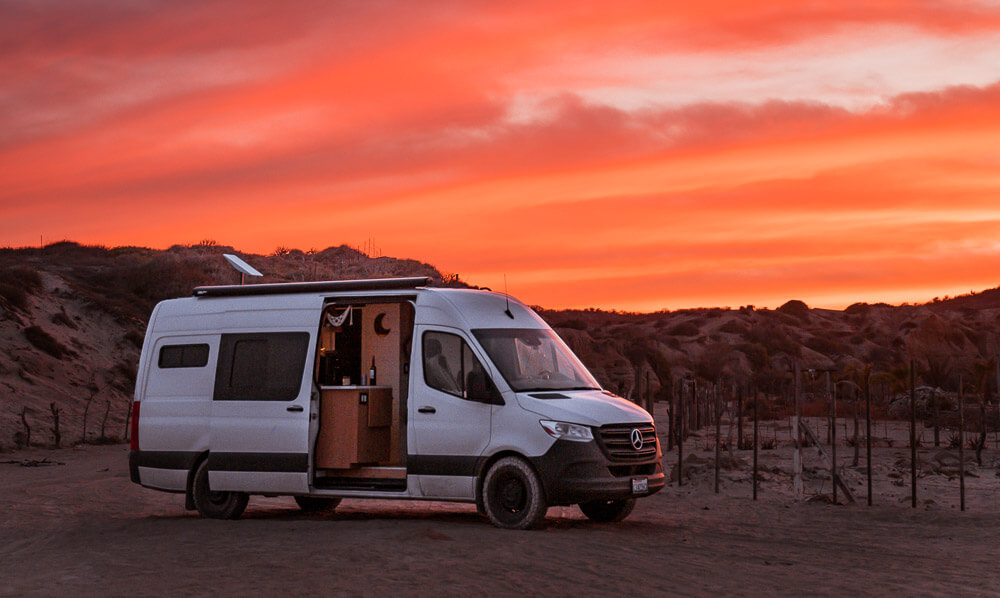
It’s worked phenomenally in Mexico. Starlink has made full time road tripping totally possible for those who work remotely and need to stay connected. The cost for home service is $120 per month and $165 for mobile/RV service. T-Mobile service does work fairly well in the cities, although occasionally it’s only 3G.
6) Pesos
I ordered $1000 US worth of pesos from my bank before we left. It was easy and hassle free. I watched the exchange rate for a few weeks until a day when the exchange rate seemed favorable to place my order. Then I distributed it among 4 envelopes hidden throughout the van with the amount written on each envelope. I figure if the van got robbed or a rogue military inspector took something, at least they wouldn’t find it all.

Plus, you may need a little cash for the FMM at the border.
When we ran out of that cash, we used a debit card at a major bank ATM to get more cash, which provides the best currency exchange rate. When the ATM asks if you want to accept the exchange rate, select NO, otherwise you’re allowing that Mexican bank to choose the exchange rate instead of your own bank. Depending on your bank, you may have a small transaction fee. We use Charles Schwab for fee reimbursement.
We made the early mistake of using cash for everything, when there are plenty of opportunities to use a credit card (which has fraud protection) and get a good exchange rate without depleting cash. Major gas stations were one as well as grocery stores that usually take cards.
7) Extra gas can
Because our diesel van can go around 400 miles on a tank, we were never at risk of running out of gas. But all the gas vehicles we were traveling with were more limited to just over 200 miles on a tank. We never had any close calls, but sometimes gas stations can be closed or a town itself has not received a gas delivery for days. So always fill up before a long section and bring an extra gas can if it makes you feel better. But don’t bring diesel across the border because of the import tax. Get it in Mexico.
Another note about filling up gas. Most gas stations were full service where someone comes and pumps for you and washes your windshield. There have been instances of gas station attendants charging you more by not zeroing out the pump. So always watch that it says zero to start and have an idea of how many gallons you should be getting and what it should cost. It’s also nice to tip the attendant for washing the window. Google suggested 10 -20 pesos or 3-5% of your fuel cost.
8) Recovery Traction Boards, tow straps, winch, etc.
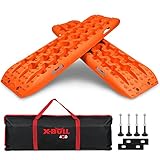
Recovery traction boards like Maxtrax can be expensive. These alternatives were a cheaper brand that still had great reviews. We strapped them to the top of the van. With all the sand and beach camping down here, I think these are important to have. We also brought a tow strap and checked where it attaches, made sure we knew where our spare tire is, and had tools, etc. Do vehicle maintenance like oil change, brake pads, DEF refill, windshield wiper fluid, etc. before leaving home.
9) Vehicle Title
If you plan to take your vehicle on the ferry from La Paz to Mazatlan and drive anywhere in mainland Mexico, OR you plan to store your vehicle at a storage facility, you are required to obtain something called a Temporary Vehicle Import Permit (TIP). If you bring a boat or trailer with you over 14.7 feet long you also need a TIP. There is a fee around $60 and necessary paperwork associated with it and certain border crossings cannot process them. You’ll likely be asked for your vehicle title in your name. So make sure to research this if you plan do this. We didn’t plan to take the ferry so we didn’t bring our title.
Apps to Use in Baja
There are a few apps I used on a daily basis on our trip to Baja.
- Google Maps – Download offline maps of the entire peninsula before you go when you have Wifi. They don’t work perfectly, but when you don’t have service in certain areas, you’ll be glad to have the maps downloaded. I also use Google maps for searching for restaurants, beaches, etc. and reading reviews and seeing pictures.
- Google Translate – Also download the offline version. Again, it’s not perfect, but it’s better than nothing. I used it frequently, even just to translate a menu at restaurants.
- iOverlander – This is especially critical for those of us who sleep in our vehicles to find safe, legal, and awesome spots to sleep each night and read the latest reports to determine if it’s still open or if the road is safe for a 2 wheel drive vehicle. But you can also filter the search to look for fresh drinking water, gas stations, showers, sanitation dumps, and so much more. You can even use it offline.
- Sekr – This one is new for me but I’m starting to use the free version (no offline capabilities) for other camping spots that are not on iOverlander. Or even things like a laundromat.
- Duolingo – There are plenty of language learning apps and programs, but I have found this one fun for Spanish. I have’t been consistent enough to really speak much Spanish, but it helps with a little daily practice.
- SkyView Lite – Totally unnecessary, but it’s free so I figured I’d throw it in there. The skies are so clear basically every night, there were times I saw more stars than I think I’ve ever seen. This app makes it so you can point your phone at the sky and it tells you which constellations and planets you’re looking at.
- WhatsApp – I never use this app unless I’m traveling. Other countries use it frequently. I used WhatsApp in Baja a number of times for making restaurant reservations or to schedule classes at a Spanish school. I also have joined a few local chat groups on there to follow local events, etc.
Crossing the Border into Baja, California
There are a number of border crossing points from California, USA into Baja California, Mexico. Most people use either San Ysidro/Tijuana, Tecate, Or Calexico/Mexicali. The latter has a West and East crossing. Most people choose the East crossing of Calexico/Mexicali over the West because it’s out of the main city and less busy and confusing. There is also crossing at Otay but I’ve read of some people with converted camper vans not being allowed to cross there or “commercial” vehicles not being accepted. So I would just choose another crossing in case. Where you cross depends on where you’re coming from and where you want to go.

Hotels near Border
If you want to stay in a hotel the night before crossing to get an early start, here are a few options at the border:
Calexico Hotels:
Holiday Inn Express Calexico, an IHG Hotel – this is closer to Mexicali West but it’s also a quick straight shot to Mexicali East, where there aren’t any hotels.
Tecate Hotels:
Unfortunately there aren’t any hotels right at the Tecate border so you’d be better off staying somewhere else or driving through the border and staying the night in wine country in Mexico not far from the border.
San Ysidro Hotels:
Studio 6 Suites San Ysidro, CA – San Diego South Bay – Great reviews and extremely close to the border crossing into Tijuana.
Crossing the Border at Mexicali East
We wanted to travel down the less populated, Gulf of California side of the Baja peninsula to dip our toes in, so to speak. Driving in Mexico made me nervous, so we wanted to avoid hectic Tijuana as much as possible. Plus, we joined a caravan of 5 vehicles, including the girl we met in Sedona last year, who planned to cross there. We all stayed the night in El Centro, California at the Walmart the night before we left. That evening we got gas, stocked up on supplies, then drove about 25 minutes to cross the border at Calexico East.
Vehicle Inspection
We crossed around 9 am and it was quick. We didn’t have to wait in line, but they did have our caravan of 5 vehicles pull over and inspected our vehicles. They looked in cupboards and drawers, the refrigerator, under the bed; it was quite thorough. The only thing we didn’t anticipate was having to pay an import tax on our 5 gallon can of diesel we filled up just before crossing the border. I had to walk into the office and pay with a credit card. It was around $27.
Items to Avoid
Obviously, make sure you don’t bring any weapons or drugs. Also, I had read to avoid bringing agriculture products so I made an effort to eat all my produce and eggs before crossing. Nobody seemed to care though. You also want to avoid bringing plants – at least that’s what I’ve heard. I did accidentally bring a plant down and no one said anything.
Obtaining Your FMM
The last thing you have to do is obtain your FMM. This tourist card is currently required for land crossing although may eventually be phased out. So be sure to check before coming what the requirement is. We obtained the FMM by staying parked in the same spot after they inspected our vehicles, taking our Passports into the building on the right that says “Puerto Fronterizo” (border port) which could be in a different location depending on which border crossing you use. You could always ask the officers. I’d read there was a good chance nobody at the border would send us to obtain the FMM and perhaps we’d never be asked for it the entire time down here. But the current law says you are required and responsible for obtaining it. There was also a parking lot to the right just up ahead that we could’ve parked at and walked back.
A really sweet lady in the office handed each of us the card to fill out with our passport information and we indicated how long we planned to stay up to 180 days, paid the fee which was around $38 US, then were given back a portion of the card to save. Our first year we paid in cash and the second year a credit card was required. So make sure to have both.
Returning to the US
But coming back across the US border will make up for it. You can check border crossing times BACK into the US by clicking HERE. We came back through at Tecate and the line was very long. It WILL take longer to cross back to the US but once we got there, we were asked 1 or 2 questions and let in.
Make sure to research the route you pick to cross back. You don’t want to follow Google maps blindly which often leads people to the Sentri lane on the far right because it’s the shortest route. Sentri is similar to Global Entry. If you use it without actually having Sentri, I’ve heard you’ll get one warning then be fined thousands of dollars the next time. And the warning isn’t always a slap on the wrist. I’ve heard of people being held up for hours, berated and searched as punishment.

Driving in Baja, Mexico
The Roads
The roads in Baja are often very narrow, windy, without shoulders and without guard rails with steep drops. There are long desert stretches with no cell service and no where to pull over. Make sure you keep your gas tank topped off and check the map to see when the next gas station is before leaving a an area with gas so you know if you can make it. There are a couple stretches down the Baja peninsula where there may be no gas for 200 miles or so. We brought a 5 gallon extra gas tank and didn’t need it. Keep in mind the diesel tax we had to pay. The people with us carrying extra gasoline, did not have to pay the tax. So if you want to buy extra diesel to carry, do it on the Mexican side of the border.
Speed Limits
Speed limits are posted frequently in kilometers per hour, so know the conversion ahead of time. Although I will say, almost everyone drives faster than the limit. Watch for people passing you even in no passing zones. If there’s a big truck in front of you, he may use his left turn signal to indicate it is safe for you to pass. Be cautious in trusting this, in case he’s actually taking a left turn. In the opposite case, when you use your left turn signal to turn left, check behind you to make sure no one thinks you are indicating they can safely pass you.
Driving Infractions and Police
Be very careful not to have your phone in your hands while driving, come to complete stops at stop signs (Alto) even if the locals don’t. Watch for those Alto signs carefully because they come out of nowhere, and don’t park where you see a no parking sign (An “E” with a diagonal line through it). I read many stories of tourists being pulled over for a minor traffic violation or a bogus one and being bribed by corrupt police.
I put a lot of effort into researching how to handle corrupt policemen. The advice I received from the Facebook Group “Talk Baja” was invaluable. I was determined to not be pressured or scared into paying a hefty bribe. I bought a dash camera, made copies of insurance info, passports, and drivers licenses. I’d read sometimes the cops will take your drivers license and try to hold it ransom until you pay the bribe. So I wanted copies to offer instead. I also printed out a statement in Spanish stating I’m aware it’s illegal for a police officer to bribe and I’d be committing a crime by paying him. I also had a printed statement demanding a printed ticket that I could take to the police station and pay and receive a receipt, if I did in fact, commit a fineable offense. My other plan was to start filming with my cell phone or call 078 for the State Secretary of Tourism 24/7 and report them with their badge number. Luckily we were never pulled over.
Military Checkpoints
There are a number of military checkpoints you’ll come to if you traverse the entire length of the peninsula. Six to be precise. Sometimes they just waved us through, other times one of the officers came into the vehicle and searched in for 5 minutes or so. Best tips I can give is assume you should stop, roll your window down, be friendly, know how to say you don’t speak Spanish if you don’t, welcome them in and sit quietly or answer their questions. If you have nothing to hide, you’ll be fine. I do think traveling in a caravan helped us because they didn’t want to stop and search all of us. And it seemed like having a dog helped some of our friends too. I have since heard stories of intensive searches where the officers insist you have marijuana and go through pill bottles, etc. in an attempt to bribe you for money.

Do I need a 4×4 to Drive to Baja, Mexico?
This was one of my biggest concerns coming to Baja. Will I be able to experience beach camping and go to all the coolest spots? Rest assured that YES, you will be able to experience the majority of the best of Baja. We didn’t get stuck after 2 months in our 2WD Sprinter and we parked on the beach every day. We were very cautious and only drove down sand roads if it looked and felt packed down. Sometimes we got out and checked.
The main highways are fine, aside from atrocious pot holes and lack of shoulders. The entire East Cape, which I’ll write more about, is an all washboard dirt road with some sand. Many roads to the beach have sand, so just inspect beforehand. Bring a tow strap, tracks, consider airing down, travel with others.
If there’s an area that’s questionable, ask around to locals or others who’ve been there. The East Cape road is really bumpy and could damage your vehicle if you don’t take it slow. But you won’t get stuck on the road itself.

Is Driving to Baja, Mexico Safe?
There is so much talk about the safety of Mexico. Baja is a little bit of a bubble isolated from the rest of Mexico. That doesn’t mean there haven’t been isolated cases of people reported missing, stories of robberies, etc. Those things do happen. Overall, I feel like my chances of getting shot in a Walmart in the US are higher than getting caught in cartel gunfire in Baja. The main things that make me feel safe there are staying out of the larger cities, not driving at night, camping in groups with other campers, locking our doors at night, not going out and getting drunk wandering around a town at night. We don’t keep a lot of cash on us either just in case something were to happen. But overall, nothing about Baja felt unsafe to me.
I hope this post has inspired you to plan your own road trip and provided you with everything you need to plan your own adventure through Baja California and Baja California Sur, Mexico. It really was some of the best months of my life and I can’t wait to go back! It’s the best possible version of “van life” that I could have ever imagined. If you have any questions, feel free to use the comment section. Gracias!
Pin for later!

Be sure to also read:

You May Also Like:


Well, hello there!

Subscribe to get my latest content by email.
This is a really great Road Trip writeup. I love it. The advice is terrific, and then pictures are great. I’ve thought about such a trip for quite a few years, and have been tempted to take one, since I live in southern California, and the Baja is not really far away. This column gives me new incentive to plan exactly such a trip … and now I have the lists of things I need to get, and good advice for the planning I need to do. Kudos to Jessica and her team!
Why would you ever go to your bank to exchange money? You always get ripped off. You go to the first atm and get the best rates without having to carry all that cash.
Rookie mistake
I didn’t exchange money, at least not at a currency exchange service. I said I ordered the foreign currency ahead from my bank. I watched the exchange rate for a few weeks and waited until a day it was optimal. If I’d withdrawn from an ATM over and over, I would still get my bank’s determined exchange rate but be at the mercy of whatever it is that day when I withdraw plus I’d have an ATM fee and a foreign transaction fee from my bank. I need to find a new bank without foreign transaction fees. But yeah, I would not ever use a currency exchange service.
Jessica we just met Chris in Pescadero. I had been spying the van and knew I needed to chat with him. Wife, Dog and myself now have the motivation and stoke to drive down in April. Breaking the lease, getting Starlink and not looking back!
I hope we get to meet you one of these days and park next to you and Chris! I think we share a love of food and stupidly good coffee!
Cheers
James and Lala Scriven
Hi Jessica –
Thanks for all the detailed information. Did you post your itinerary – if so, I missed it! Where can I find it?
Thanks,
Shannon
Thank you so much Shannon! Sadly I’ve been working on my itinerary post and keep getting distracted by other things. I apologize. I’ll try to prioritize it this next week. It’s sort of long and I’ve been trying to summarize both last winter and my current winter there into roughly 30 optimized days. Thanks for the reminder haha!
Hi Shannon! It’s taken me a while, but I finally posted the itinerary if you’re interested! https://www.myfeetwillleadme.com/one-month-baja-mexico-road-trip-itinerary/
Hi Jessica,
Thank you for providing so much useful information here. We just took a trip down south to Guerrero Negro for whale watching and here are few more tips about driving in Baja:
– cartels are not an issue, we haven’t experienced their presence although I’m sure they exist. We were sticking to tourist places and everything went fine.
– the actual dangers there came from unexpected side: the roads themselves, the main problem there is luck of the shoulders- the road ends where the lane ends. While here in US 3 cars can make it on 2-lane hwy because of the extra space available it’s not the case there. The moment the right wheels go off the asphalt I think you’d be lucky to come out alive as usually there’s a ‘step’ almost foot high down to the sand, the road surface is normally running above the desert level. Running into the sand with one side of the car at speed is very dangerous.
– if the car breaks there’s no spot to pull over unless the car is all- wheel drive. I don’t really see normal front wheel drive vehicle making it back from the sand. As a result broken cars tend to remain on the asphalt blocking the only lane for the rest of the traffic. Standing still on a hwy is dangerous so please bring warning signs, flares, etc to warn traffic behind you about the problem, I’d put them at least 200-300 yards back to leave them room to react.
– the Hwy 5 is definitely better than Hwy 1: there’s 1-2 foot shoulder present and it has small number of potholes. Hwy 1 on the other hand is much worse – no shoulder whatsoever and it’s full of potholes that can go for tens of miles. We saw a car that blew its tire after running into one of those. Then, out of sudden all the above dangers become relevant- no space to pull over, no cell phone connection and if you didn’t bring any warning signs the only option left is to walk back hundreds of yards to wave and warn incoming traffic. Even simple wheel replacement can be dangerous there.
– while there’re no signs reflecting max speed a turn can be taken at the Google Maps provides a hint based on how sharp the path turns there.
– drivers there are very nice and courteous compare to US: if they notice you’d like to pass they usually slow down and squeeze to the right to unblock you view of the upcoming traffic. We haven’t met a single idiot trying to prevent anyone from passing. The big rigs usually turn their left turn signal letting you know it’s safe to pass them although the ultimate responsibility remains with the driver. I also saw them waving the truck which might seem like they’re trying to prevent you from passing while in reality it was always due to upcoming traffic that was difficult to see and they always stopped that once the traffic passed. We haven’t seen them making a group and preventing anyone passing, they usually do the opposite – leaving room between them so passing cars could pass them one by one.
– passing military checkpoints were uneventful- yes, they are armed but then again it’s a military checkpoint after all. Otherwise they expressed 0 interest in us and it looked like they were asking questions mostly out of being bored. Speaking at least some Spanish would definitely help but we passed all right even without- just remain calm and patient.
– we were not stopped by regular police so no comments there. We saw them from time to time but they didn’t chase our US plates. Speed limits there are ridiculously low, especially in living areas so it takes some effort to slow down and blend with local traffic.
– when a road has diagonal zebra with thin white lines it’s a warning something is coming up- sharp turn, speed bump or just speed limit drop. Please always slow down on those.
– we haven’t checked but T-Mobile runs beta program where they integrate cell phones with Starlink providing currently text capability with voice and data coming next. One doesn’t have to have phone number from T-Mobile to use that but again we haven’t checked that feature. If it works even text would be infinitely better than nothing in those places.
– the food is delicious and while that is not news, we didn’t expect so much difference
Thank you Michael! Appreciate the detailed comment, agree wholeheartedly. I’ve since switched to T-Mobile and applied for the beta testing with starlink. That’ll be sweet when it’s up and running.I never saw evidence of cartel activity either…although recently there was some discussion on the FB Page “Talk Baja” about the cartel imposing a curfew on San Felipe. Hard to tell how serious it was. Baja is a magical special place to visit. Glad you had a great time.
We briefly passed San Felipe on the way South and stayed overnight on the way back. Had a dinner around 9 pm on the seaside, the night life was going on- loud music, people walking around, the road parallel to the beach was packed with traffic. We didn’t notice any tension although it was our only night there, hard to tell if it was any different from the usual. Next morning we saw couple military trucks with soldiers manning machine guns but it looked more like ‘asserting the presence’ than active military operation. We haven’t seen them stopping or checking anyone, the life around was going on normally: people walking, enjoying beach, bikers group getting together, businesses were working.
We stayed at hotel Marea Baja due to its location close to the beach and the restaurants and its fenced parking lot. It’s a little on the expensive side but for 1 night stay convenience beat everything. We booked the rooms over the phone from Guerrero Negro and when we finally arrived after the dark they got us rooms right away. We dropped our things and went to the restaurant. When we were there waiting for the food I received a call from their reception desk letting me know I forgot to turn off my headlights. The car has battery saver feature and turned itself off while we were on the phone but it was very nice of them to care. Overall we had very pleasant experience and I’d say other places on the Internet paint unfairly daker picture than it really is: if one is not deliberately looking for trouble I think Baja is a friendly place to visit.
I agree completely. We always had wonderful experiences with friendly locals.